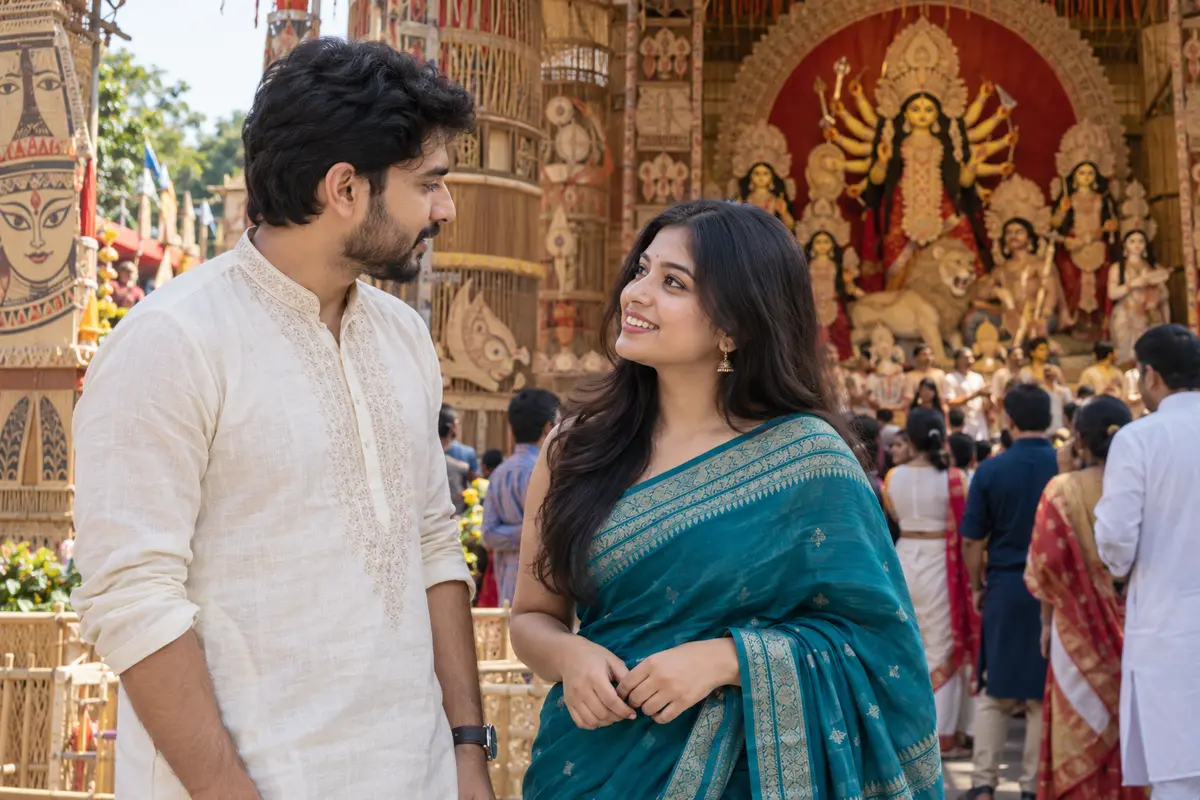
How to plan a quiet Durga Puja date
A Durga Puja date can be memorable without a marathon of crowded pandals, an expensive dinner or a photograph at every entrance. For two unmarried Bengali adults getting to know each other, a quieter plan often makes room for something more useful: listening. You can notice how your date responds when you need a break, whether they respect your religious choices, and how naturally you make small decisions together. This guide focuses on comfort and personal boundaries rather than another list of places to visit. It is for Bengali singles in West Bengal who want festive connection without feeling that they must perform romance for the crowd.
Whether you began talking through aisho.live or met through friends, treat the festival as a setting for conversation, not a shortcut to trust. Beautiful lighting and familiar songs can make a new connection feel unusually close. Enjoy that feeling, while remembering that genuine compatibility develops through repeated, ordinary interactions. A good Puja date leaves both people free to enjoy the celebration in their own way. Neither person should need to dress, worship, spend, stay out or share pictures simply to prove enthusiasm. The most attractive plan is one that both adults can genuinely choose.
Understand what the celebration means to your date
Durga Puja in West Bengal brings together worship, artistic work, neighbourhood participation and homecoming. Kolkata’s celebration is recognised by UNESCO as intangible cultural heritage, but its meaning is personal as well as public. One person may associate Puja with family rituals and the sound of dhak; another may remember meeting school friends, admiring pandal artwork or helping with community arrangements. Ask what they look forward to instead of assuming that all Bengali people celebrate identically. A question such as “Which part of Pujo feels most like home to you?” can open a thoughtful conversation without turning the evening into a cultural examination.
Traditions vary between community pujas, household celebrations and individual families. A neighbourhood event may have different visitor arrangements from a household puja, and access should never be presumed. Follow the organiser’s directions and the host’s invitation. If your date knows a particular tradition, invite them to explain only if they want to. Being Bengali does not mean they are responsible for guiding every ritual or correcting every misunderstanding. Curiosity works best when it is gentle: listen to their experience, avoid generalisations, and accept that another Bengali person’s experience may be different.
Respect ritual spaces without making participation compulsory
Pushpanjali, arati and other observances are not entertainment arranged for a date. If you choose to attend, ask the organisers about the appropriate time, place and conduct. Keep entrances and worship areas clear, put your phone away when requested, and avoid speaking over announcements. Your partner may wish to participate, observe quietly or skip a ritual entirely. Each choice deserves respect. Do not interpret participation as proof of shared values, or non-participation as rejection of Bengali culture. A thoughtful date separates personal belief from relationship pressure and never asks someone to pretend devotion for the sake of a romantic photograph.
Make a comfort agreement before you leave
A comfort agreement is simply a short, practical conversation. Decide how long you want to meet, how much walking feels manageable, and what kind of crowd you both enjoy. You might agree on one public meeting point, one nearby pavilion and a conversation break, with no obligation to add more stops. Ask whether loud sound, flashing lights, stairs or long queues could make the outing difficult. Do not demand a medical explanation. Someone can say “I prefer less noise” without explaining their health history. Taking that preference seriously is a small but important demonstration of care.
Build in a clear end time, especially for an early date. “Let’s meet for about an hour, then see whether we both want to continue” gives the evening a shape without locking either person into it. Agree that leaving early will not be treated as an insult. Set a public regrouping point in case a crowd separates you, and keep independent return arrangements. A charged phone and a trusted person’s awareness of the plan are sensible precautions, not guarantees of safety. If either person feels uncomfortable, the plan should become simpler rather than more ambitious.
Use a simple pause phrase
It can be awkward to ask for a break when the other person looks excited. Agree on an ordinary phrase such as “Can we find somewhere quieter?” before that happens. The response should be action, not a debate about whether the crowd is really that intense. Move to an appropriate public area, take water if wanted, and ask whether continuing feels comfortable. Do not insist that a tired date smile for another picture or complete one more queue. Respecting a pause is more revealing than finding the most impressive backdrop. It shows that the person matters more than the itinerary.
Choose traditional Bengali clothing that feels like you
A saree and a Bengali panjabi can be lovely choices for a festive date, but they are choices rather than eligibility requirements. Select breathable fabric, a secure fit and footwear you have already worn comfortably. A carefully pinned cotton saree can be easier to manage on a long walk than an unfamiliar elaborate outfit. A panjabi with comfortable trousers is perfectly suitable if a dhoti would feel impractical. Check the forecast and local conditions before leaving. Bring a light protective layer or umbrella if needed, and avoid accessories that make movement difficult in a busy public setting.
For Aishō’s unmarried-couple imagery, women are shown without sindoor, mangalsutra, bridal jewellery or other married-woman indicators. That visual rule is not a judgment about anyone else’s clothing or identity. In your own dating conversation, avoid imposing assumptions about relationship status based on appearance. Discuss expectations directly and respectfully. Compliments can focus on colour, fabric or personal style rather than demanding a “traditional enough” look. “That blue really suits you” is warmer than comparing your date with an idealised image of a Bengali woman or man. Comfort and individuality belong in festive dressing too.
Let food be a conversation, not a test
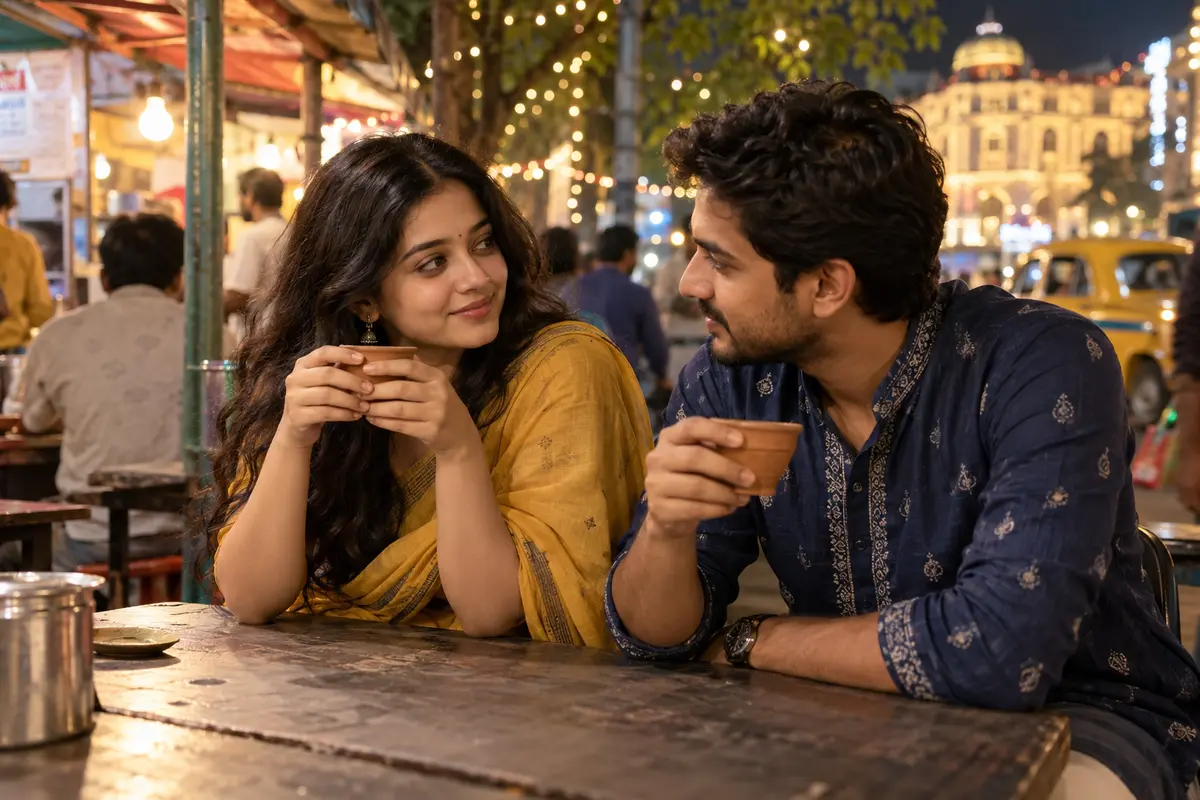
A tea break or small snack can create space to talk, but food preferences should be discussed before ordering. Ask about allergies, dietary restrictions, fasting or personal choices without making someone defend them. Bhog is a sacred offering and community service, not a guaranteed restaurant booking or a free-food strategy. If a puja offers distribution to visitors, follow the local arrangement, queue respectfully and avoid waste. Menus, timings and availability vary. Do not promise your date a particular meal unless the organisers have confirmed it, and keep a separate paid refreshment option nearby if needed.
There is no need to turn a food stop into a performance of Bengali authenticity. Someone who prefers water to tea, avoids sweets or does not enjoy a popular snack is still entitled to their preference. Share only when both people want to, and do not feed someone or touch their plate without asking. Agree on payment casually: you can split the bill or one person can offer to pay, but an offer should never create an expectation of affection. A modest stop can feel special when the conversation is relaxed and nobody is being evaluated for ordering the “correct” thing.
Ask questions that leave room for a real answer
Festival conversation works well when it begins with experience rather than interrogation. Ask which childhood Puja memory still makes them smile, what artwork caught their attention, or whether they enjoy familiar neighbourhood celebrations more than large themed events. Share your own answer instead of firing the next question immediately. Silence can be comfortable; you do not have to fill every moment. If a memory brings up sadness or family tension, acknowledge it without pushing for details. A date is not an interview, and emotional openness should never be demanded as the price of a pleasant evening.
As the conversation develops, notice everyday preferences. How do you each recharge after a social event? Do you prefer spontaneous changes or a clear plan? What makes you feel considered when you are tired? These questions reveal practical compatibility without making premature promises. A disagreement about crowds or food is not automatically a red flag. The more useful question is whether you can discuss the difference kindly. If your partner says they prefer a shorter outing, see whether you can adapt without resentment. Mutual flexibility matters more than matching every answer.
Avoid cultural and romantic scorekeeping
Do not measure someone’s suitability by the number of pandals they have seen, their knowledge of ritual names or how fluently they speak Bengali. Language, upbringing and access to celebrations differ. Similarly, an enjoyable hour does not oblige anyone to hold hands, continue late into the night or agree to another date. Keep compliments sincere and invitations specific. “I enjoyed talking about the artwork; would you like to meet for tea another day?” is clear without pressure. If the answer is uncertain, give space. Respect is not something to withdraw when enthusiasm is not immediately returned.
Keep photography separate from consent to date
Ask before taking a portrait and ask separately before sharing it online. Agreeing to meet is not permission to publish someone’s face, tag their account or reveal their location. Your date may be comfortable with a private photograph but not a public relationship implication. Avoid posting in real time when it could expose your whereabouts. Check whether photography is permitted inside a pavilion, and never block worshippers or visitors to stage a shot. If someone says no, put the camera away without teasing them about being shy. Their boundary does not need a persuasive explanation.
Photography can also change how an evening feels. If every conversation stops for another pose, the date may become content production rather than connection. Consider one optional photo at a suitable public spot, then keep phones away. Never record a personal conversation secretly or use a candid image to imply a relationship that has not been discussed. When creating an Aishō blog image, make clear that an illustrative scene is not evidence that a real person uses the service. In real life, the same principle applies: do not turn someone else’s presence into an endorsement.
Know which traditions are not dating activities
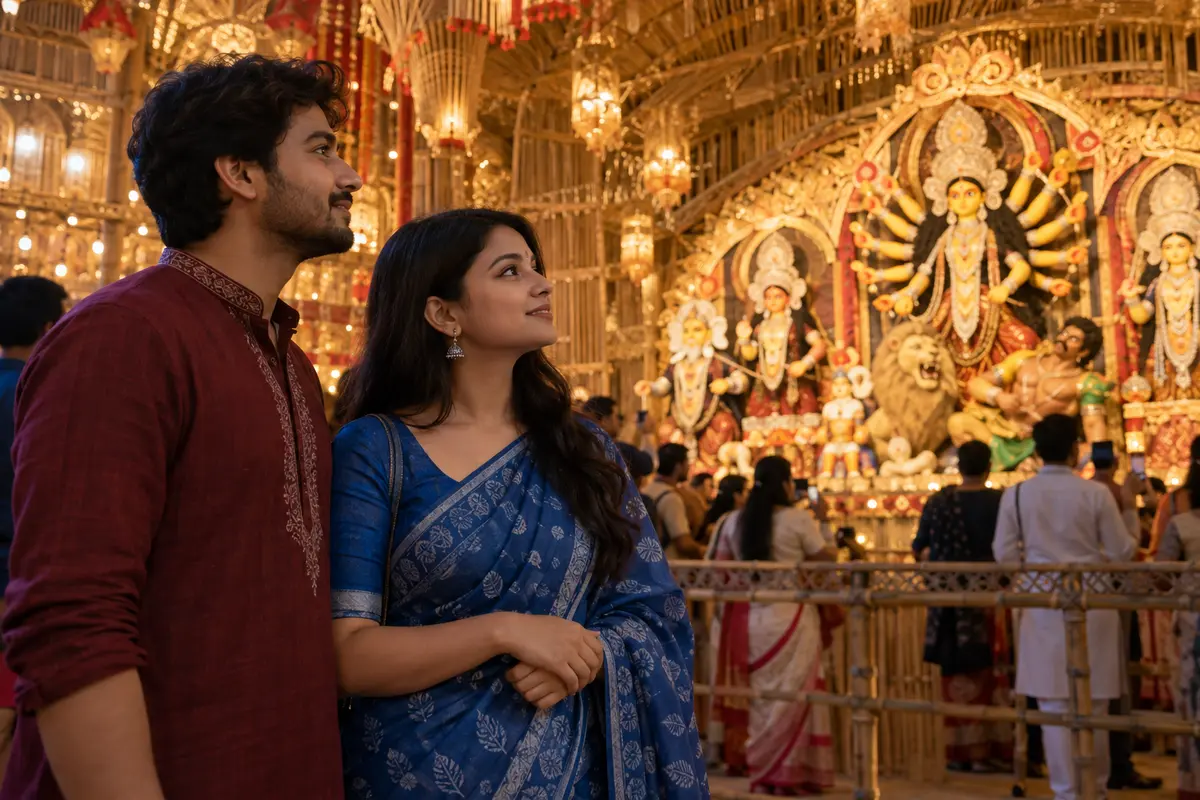
Some Puja customs carry specific religious and social meanings. Sindoor khela is traditionally associated with married women in many celebrations and should not be suggested as a romantic activity for an unmarried dating couple. Practices and participation can vary, but visitors should not assume permission or recreate a ritual for a couple photograph. This guide deliberately excludes sindoor and bridal styling from its visual scenes. Likewise, do not handle ritual objects, enter restricted areas or imitate an observance because it looks dramatic on camera. Ask a knowledgeable organiser when unsure, and accept the answer.
Dhunuchi dance may be part of a local celebration, but participation depends on the organisers’ arrangements and your ability to take part safely. Do not pressure someone to perform, especially around hot incense containers, crowded floors or unfamiliar movement. Watching respectfully can be just as meaningful. The same approach applies to dhak performances and community programmes: appreciate the work, make room for participants and do not demand a private performance. Cultural respect is not a separate checklist added to romance. It is part of how you treat the people and places around your date.
End the date with clarity and kindness
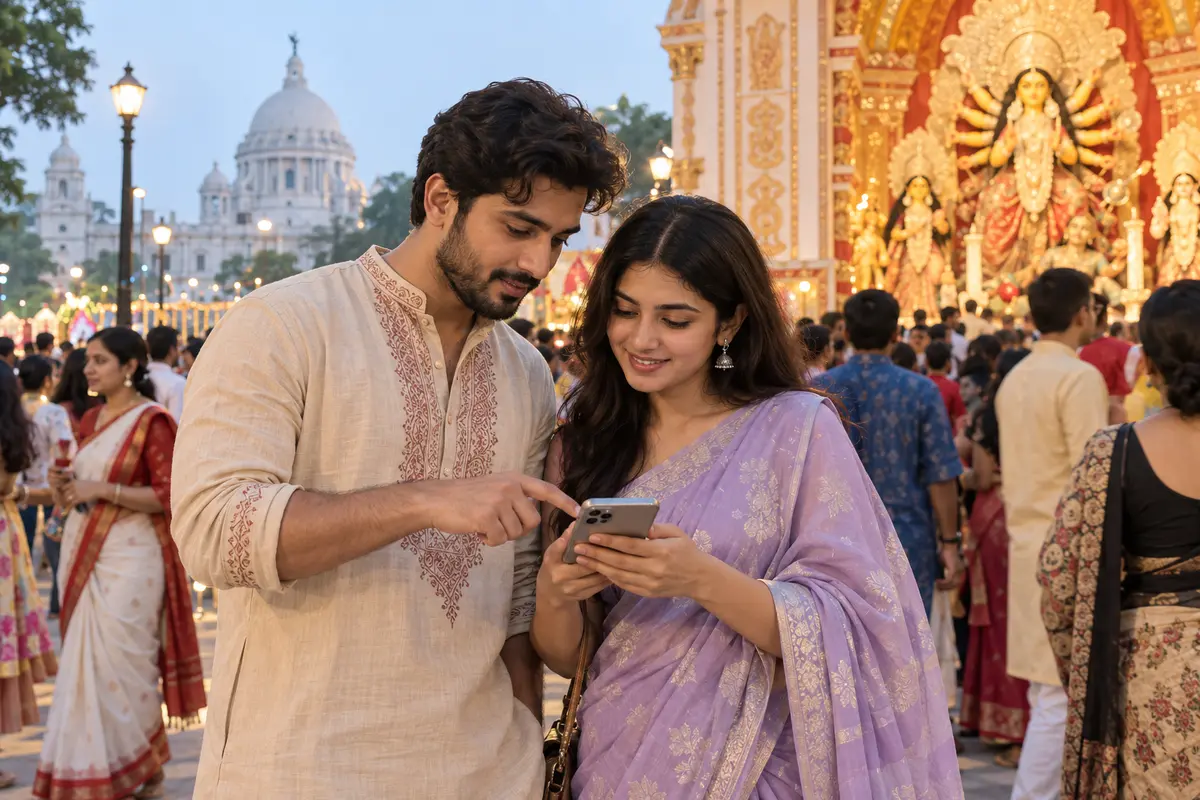
Before leaving, check that both people know their own return plan. Offer help without assuming responsibility for controlling the other person’s journey. A lift is an option only when genuinely wanted; independent transport can be preferable on an early date. Do not ask for a home address simply because the evening went well. If you agreed to a brief arrival message, send one when convenient, but avoid making constant updates a requirement. A considerate goodbye can be simple: thank them for the time, mention something you enjoyed and allow the conversation to end naturally.
Later, evaluate the date without the festival’s glow doing all the work. Did you feel able to speak honestly? Was a small boundary respected? Did you enjoy the conversation when there was no spectacle to watch? Those observations are useful whether you want another meeting or not. If you do not want to continue, communicate politely and avoid vague promises. If you do, suggest a low-pressure everyday meeting. Puja chemistry can be a beginning, but it should lead towards ordinary consistency rather than an immediate claim that the connection is destined.
Use Aishō as a starting point, not a safety guarantee
If you are exploring Bengali dating through aisho.live, be honest about your intentions and discuss your preferred pace before arranging a meeting. Keep personal and financial information private until trust is established, and never send money because a new match describes an urgent situation. No dating platform, festive venue or shared cultural background can guarantee another person’s behaviour. A public meeting, independent transport and clear boundaries remain important. For more planning perspectives, read our Durga Puja dating guide for West Bengal, review how to meet Bengali singles safely during Durga Puja, or explore the Aishō dating blog collection. Choose advice that suits your circumstances rather than treating any checklist as certainty.
A quiet Durga Puja date is not a lesser celebration. It can be a deliberate way to notice the artwork, appreciate Bengali traditions and learn whether another adult makes you feel comfortable being yourself. Begin with a manageable plan, leave space for different beliefs and preferences, and let affection develop without pressure. The best outcome is not necessarily a couple photograph or a second date. It is an evening in which both people felt respected. That is a stronger foundation for connection than any crowded itinerary, and it remains valuable long after the festive lights come down.
Cultural reference
For background on the festival’s community and artistic significance, see UNESCO’s Durga Puja in Kolkata entry. Confirm local ritual timings, entry arrangements and accessibility directly with organisers.